
Decluttering feels great once it’s done. Getting started is the hard part.
Most people hit the same wall: they clear out one area, run out of places to put things, and end up with a messier space than when they began. The problem usually isn’t too much stuff — it’s too little system.
These 10 storage ideas are built for real apartments and real garages. No expensive overhauls. No Pinterest-perfect fantasy setups. Just practical solutions that actually work.
Step by Step Overview
1. Go Vertical with Wall Shelving
Floor space is limited. Wall space almost never gets used.
Mounting shelves on walls immediately creates storage without eating into the room. Adjustable shelving is worth the small extra cost — it lets you reconfigure as your needs change rather than being locked into fixed heights.
In apartments, wall shelves work well for books, kitchen basics, and everyday items you want within reach. In garages, the same principle applies to tools, hardware, and seasonal supplies.
The higher you go, the more room you free up below.
2. Invest in Furniture That Pulls Double Duty
Every piece of furniture in a small space should earn its place.
Ottomans with hidden compartments, beds with built-in drawers, and lift-top coffee tables all offer storage without adding bulk. You get the function of a storage unit without giving up any additional square footage.
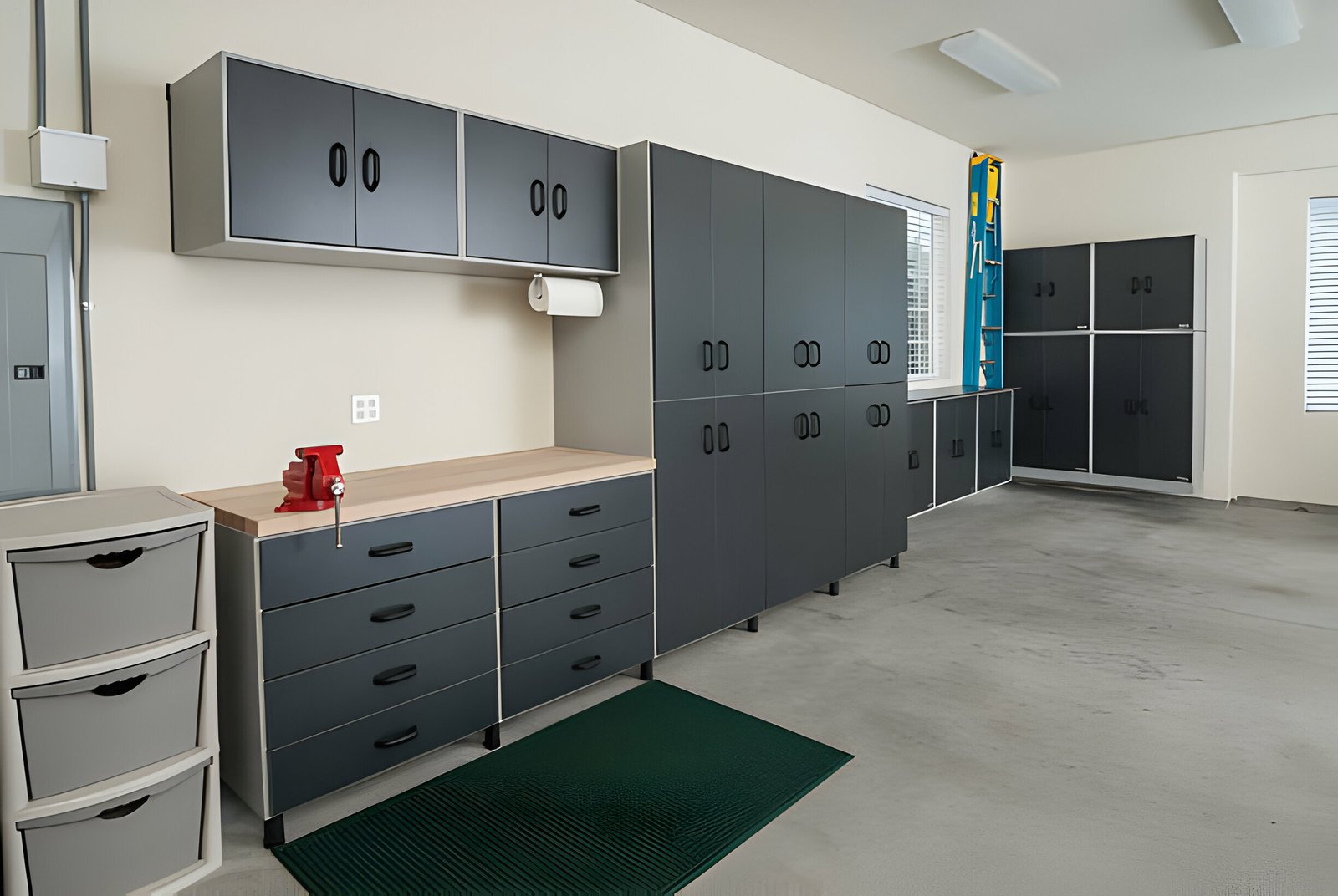
For garages, a workbench with built-in shelving or drawers underneath does the same job — it keeps tools organized and off the floor while giving you an actual work surface.
When you’re shopping for furniture, make storage a non-negotiable feature, not an afterthought.
3. Rethink Your Closet Setup
Most closets are dramatically underused.
A standard rod and a single shelf leaves half the available space empty. Adding hanging shelf dividers, a second rod for shorter items, a shoe rack, or an over-the-door organizer can double usable capacity without touching the walls.
In apartments, slim velvet hangers and cascading hooks make a noticeable difference in how much clothing fits. In garages, heavy-duty pegboard organizers or wall-mounted tool racks transform a cluttered closet into a functional storage zone.
It doesn’t take a full renovation. A few inexpensive organizers and an afternoon is usually enough.
4. Create Dedicated Zones
Disorganization rarely comes from having too much stuff. It usually comes from having no system for where things live.
Dividing your space into dedicated zones — storage, work, recreation, utilities — makes everything easier to find and easier to put back. When everything has a home, clutter stops accumulating.
Use labeled bins, color-coded containers, or simple shelf sections to keep each zone distinct. The labels matter more than they seem — especially in shared spaces or garages where multiple people are grabbing and returning items.
5. Use the Spaces You’re Ignoring
Most homes have several underused storage zones hiding in plain sight.
The area under the bed is one of the most obvious. Low-profile storage bins or bed risers with drawers can hold off-season clothing, extra bedding, or shoes without taking up any additional room.
Staircases are another overlooked opportunity. Built-in drawers beneath each step are a bigger project, but pull-out bins or baskets tucked into the space under an open staircase cost almost nothing.
In garages, the space above head height — running along the ceiling — often sits completely empty. That’s prime real estate for seasonal items, camping gear, and anything you need occasionally but not daily.
6. Put Your Walls to Work
Beyond shelving, walls can handle a surprising amount of storage.
Pegboards are one of the most flexible solutions available. In a garage, a pegboard wall keeps tools visible, accessible, and off the workbench. In an apartment kitchen or craft room, the same setup works for utensils, scissors, tape, and supplies.
Grid panels and magnetic strips serve a similar purpose for smaller items — spice racks, office supplies, gardening tools, keys. The benefit is visibility. When you can see what you have, you use it more and buy duplicates less.
7. Choose Furniture with Hidden Storage
Visible clutter is stressful. Hidden storage solves that.
Sofas with under-seat compartments, benches with lift-up lids, and side tables with interior shelves all keep commonly used items close without leaving them out in the open.
This approach works especially well in apartments where storage space is genuinely limited. Blankets, extra pillows, chargers, remote controls — all of it can disappear into furniture that looks completely normal from the outside.
8. Repurpose What You Already Own
You probably already have more storage solutions than you realize — they’re just not being used that way.
Mason jars make excellent pantry organizers for dry goods, small hardware, or craft supplies. Hanging shoe organizers mounted on the back of a door can hold cleaning products, toiletries, or small tools. Old wooden crates become instant shelf units or display storage with a coat of paint.
This approach is particularly useful during a cleanout, when the goal is reducing what you own — not spending money on new containers to hold more of it.
9. Add Overhead Storage in the Garage
If you haven’t looked up lately in your garage, you’re missing a significant amount of usable space.
Ceiling-mounted storage racks are designed to hold large, heavy items — holiday decorations, sports equipment, luggage, camping gear — while keeping them completely out of the way. Many systems can hold several hundred pounds and adjust to different ceiling heights.
The floor space you reclaim makes the garage feel twice as large. More importantly, it makes the things you do use daily much easier to access.
10. Build a System That Fits Your Life
Generic organization advice only goes so far.
The storage system that actually sticks is the one built around how you specifically use your space. A home gym needs different solutions than a woodworking garage. A studio apartment has different priorities than a two-bedroom.
Start by identifying your three biggest storage pain points. Build around those first. Then layer in shelving, bins, and organizers as needed until the space feels functional — not just tidy for the photos.
A combination of open shelving for frequently used items, closed cabinets for things you want out of sight, and labeled bins for categories works well as a starting framework for most spaces.
When the Clutter Is Beyond Organizing
Sometimes the issue isn’t a lack of storage systems — it’s simply too much stuff.
If you’re staring at a garage full of items you haven’t touched in years, or an apartment where every corner has become a catch-all, organization can only do so much. A proper cleanout comes first.
Clearing out the things you no longer need — responsibly, not just shifting them to a different pile — is what makes any storage system actually work.
That’s where we come in. Our apartment and garage cleanout services remove the junk, handle the heavy lifting, and leave you with a clean slate to organize properly.
Ready to start? Book your cleanout today.
The Bottom Line
A well-organized space doesn’t happen by accident. It happens when storage is intentional — when every item has a place and every available space is being used thoughtfully.
Pick two or three of these ideas and implement them this week. Small, consistent improvements add up faster than a single all-day reorganization that leaves you exhausted and only half-finished.
Start simple. Build the system around your life. And when the clutter feels like more than organizing can fix, don’t hesitate to call in help.